Why your water heater keeps running out of hot water
Running out of hot water mid-shower? Here's why it happens in Littleton homes - sediment, dip tubes, undersized tanks - and what the fix actually costs.
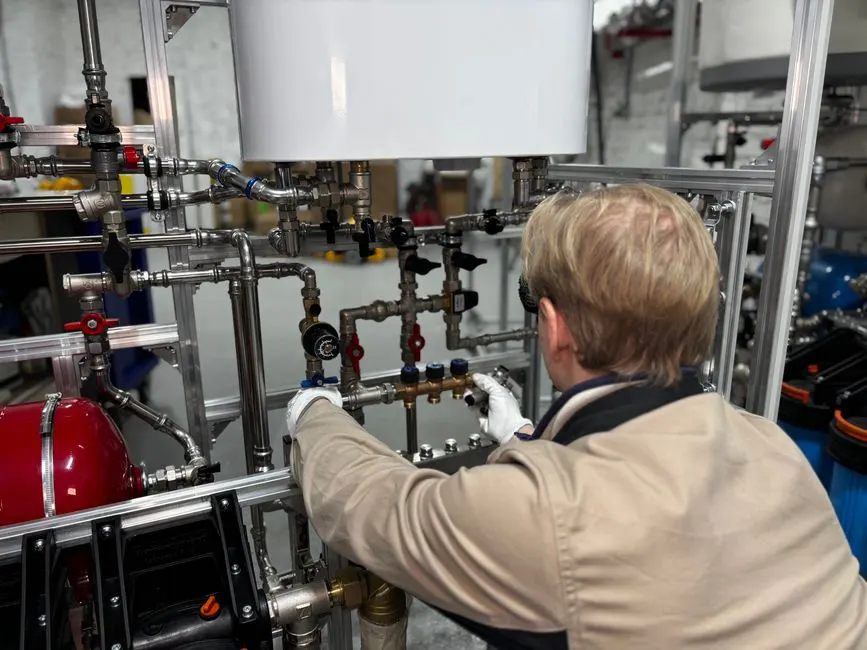
Your water heater keeps running out of hot water because the tank is either not holding enough hot water or not heating it fast enough - and in Littleton the two most common culprits are sediment buildup on the tank floor and a broken dip tube that lets cold water mix with hot at the top of the tank. Both are repairable, and neither means you automatically need a new water heater. This guide walks through every realistic cause we see on service calls across Littleton, how to test each one yourself in about 20 minutes, and what the fix costs in 2026.
Why water heater runs out of hot water Littleton CO homeowners ask about is almost always one of six things: sediment, a failed dip tube, a bad lower heating element, an undersized tank, a crossed cold/hot connection, or a thermostat that has drifted. We will go through them in the order we check them on a truck, because the cheapest fix is usually the one hiding under the most obvious symptom.
Why does my water heater run out of hot water so fast in Littleton CO?
Littleton's water is hard - Denver Water and the South Platte aquifer both deliver water in the 7 to 10 grain-per-gallon range, which is roughly 120 to 170 mg/L of dissolved calcium and magnesium. That mineral load is the single biggest reason water heaters in this city lose capacity years before their tank fails. Every gallon you heat leaves a thin crust of scale on the tank floor and the heating elements. After three to five years of Littleton water, a 50-gallon tank often behaves like a 35-gallon tank.
Cold groundwater makes it worse. Water entering a Littleton home in January comes out of the tap at about 45 to 50 degrees Fahrenheit, versus 65 to 70 in Phoenix or Houston. A gas water heater has to raise that incoming water 70 to 75 degrees to hit a 120-degree shower, and that extra lift eats into recovery time. If your shower used to last 15 minutes and now lasts 8, the tank is not broken - it is working harder against colder supply water and less usable capacity.
The third local factor is age. A large share of the housing stock in Columbine Hills, Leawood, and the neighborhoods around downtown Littleton was built between 1965 and 1985, and many of those homes still have the original 40-gallon tank footprint. A 40-gallon tank was fine for a family of three in 1978. It is not fine for a family of four with a teenager who takes 20-minute showers.
The six reasons Littleton water heaters quit early
Here is the diagnostic order we use on every call, from the cheapest fix to the most expensive.
1. Sediment on the tank floor
Scale and sand settle to the bottom of the tank and form an insulating layer between the burner (or lower element) and the water. You will hear a rumbling or popping sound - that is steam trapped under the crust. The burner runs longer to heat less water, and usable hot water drops by 20 to 40 percent before the tank ever leaks. A full flush and sediment removal restores most of that capacity.
2. A broken dip tube
The dip tube is a plastic pipe inside the cold-water inlet that carries incoming cold water to the bottom of the tank. When it cracks or snaps off - common on tanks built between 1993 and 1997, and still seen on cheap replacements - cold water dumps into the top of the tank where the hot water outlet sits. The result is hot water that goes lukewarm after 3 to 5 minutes, even though the tank is full of hot water at the bottom. A dip tube replacement is a $150 to $300 repair and takes about an hour.
3. A failed lower heating element (electric tanks)
On a two-element electric heater, the lower element does most of the heavy lifting. When it burns out, the upper element alone can only heat the top third of the tank. You get a few minutes of hot water, then nothing. A multimeter test across the element terminals tells you in 90 seconds whether it is open. Replacement is $180 to $350 including the part.
4. An undersized tank for the household
Standard sizing is 40 to 50 gallons for two people, 50 to 60 for three, 60 to 80 for four or more, plus 10 gallons if you have a soaking tub or a high-flow showerhead. If your tank is at the low end of that range and your household has grown, no repair will fix it - you need more capacity or a tankless unit.
5. Crossed cold and hot connections
This one shows up after a remodel or a DIY install. If the cold and hot lines are reversed at the tank, or if a single-handle shower valve is passing cold water into the hot side, hot water dilutes before it reaches the fixture. A plumber can confirm it in 10 minutes with a touch test on both nipples at the top of the tank.
6. A drifting thermostat or bad thermocouple
Gas water heaters with a thermostat that reads 5 to 10 degrees low will still fire, but the tank never reaches full temperature. You get warm showers instead of hot ones, and the tank runs out faster because the stored water is cooler to start. A thermostat or gas valve replacement runs $250 to $450.
How to test your own water heater in 20 minutes
Before you call anyone, run these five checks. They will not fix the problem, but they will tell you which of the six causes above is most likely, and that saves diagnostic time on the visit.
- Listen at the tank. Rumbling or popping means sediment. Silence means look elsewhere.
- Run a hot-water-only test. Fill a 5-gallon bucket at the tub with only hot water and time how long it stays above 110 degrees. Under 6 minutes on a 50-gallon tank points to a dip tube or lower element.
- Check the temperature setting. The dial should read 120 degrees Fahrenheit. If it is at 140, you are burning gas to store water hotter than you need and shortening the tank's life.
- Look at the age sticker. Every tank has a serial number that decodes to the manufacture date. Tanks over 10 years old are on borrowed time - repairs still work, but weigh the cost against replacement.
- Touch both nipples on top of the tank. The left one (looking at the tank) should be hot, the right cold. If they are reversed, you have a crossed connection.
If you would rather not climb around a gas appliance, our team handles Water Heater Repair Littleton CO calls every day and can diagnose the same six causes in about 30 minutes with a combustion analyzer and a multimeter.
Common mistakes that make it worse
The fastest way to turn a $200 repair into a $2,000 replacement is to ignore the early symptoms. Here is what we see homeowners do that backfires.
- Cranking the thermostat to 150+ to stretch the shower. This accelerates scale formation and can scald a child in under two seconds. It also voids most manufacturer warranties.
- Never flushing the tank. Littleton's hard water means an annual flush is the single highest-return maintenance task you can do. Skipping it for five years cuts usable capacity by a third.
- Replacing the lower element without flushing first. The new element sits in the same sediment bed and burns out in 12 to 18 months.
- Assuming a tankless unit will fix everything. Tankless heaters solve capacity problems, but they need annual descaling in this water - and if your incoming water is 45 degrees, you need to size the unit for the temperature rise, not just the flow rate.
- Ignoring a dripping T&P valve. That is a pressure problem, not a hot-water problem, and it can mean the tank is about to fail.
If you are weighing repair against replacement, our Water Heater Maintenance Littleton CO visits include a full flush, anode rod inspection, and a written condition report - which is the cheapest way to know whether your tank has two years left or ten.
How much does it cost to fix a water heater running out of hot water in Littleton?
Typical 2026 pricing in the Littleton area breaks down like this. These are installed prices - parts and labor - not estimates that balloon once the truck arrives.
- Full tank flush and sediment removal: $150 to $250
- Dip tube replacement: $150 to $300
- Lower heating element replacement (electric): $180 to $350
- Thermostat or gas valve replacement: $250 to $450
- Anode rod replacement: $200 to $350
- Full tank replacement (50-gallon gas, installed): $1,400 to $2,200
- Tankless installation (whole-home, gas): $3,200 to $5,500
The rule of thumb we give customers: if the repair is under 40 percent of the cost of a new tank and the tank is under 10 years old, repair it. If the tank is over 12 years old and the repair is over $500, put that money toward replacement. A leaking tank is never worth repairing - the leak is the failure, not a symptom.
If you have already decided the tank is done, our Water Heater Replacement Littleton CO service includes haul-away of the old unit, a new expansion tank where code requires it, and a permit pulled with the City of Littleton.
When to call a professional
Call a licensed plumber when the tank is gas-fired, when you see water on the floor, when the breaker trips every time the element kicks on, or when you have already replaced one part and the problem came back. Gas work, T&P valve replacement, and anything involving the flue or combustion air are not DIY jobs - carbon monoxide does not give you a second chance.
Our technicians at Littleton Water Heater Pros carry the parts for the six causes above on every truck, so most repairs are done in a single visit. We test the tank, tell you what failed and why, and give you a flat price before we start. If the honest answer is that a new tank makes more sense, we will tell you that too.
Frequently Asked Questions
Why does my water heater run out of hot water so fast in Littleton CO?
Hard water and cold incoming supply. Littleton water runs 7 to 10 grains per gallon, which scales the tank floor and cuts usable capacity by 20 to 40 percent within five years. Cold winter groundwater (45 to 50 degrees) also slows recovery time. A flush and dip tube check fixes most cases.
How can I fix my water heater running out of hot water in Littleton?
Start with a full flush to clear sediment, then test the lower heating element with a multimeter and check the dip tube. Those three fixes cover about 70 percent of calls. If the tank is over 12 years old or leaking, replacement is the better spend.
Should I repair or replace my water heater if it runs out of hot water in Littleton CO?
Repair if the tank is under 10 years old and the fix is under $500. Replace if it is over 12 years old, leaking, or the repair exceeds 40 percent of a new installed tank. A 50-gallon gas replacement runs $1,400 to $2,200 in 2026.
How much does it cost to fix a water heater running out of hot water in Littleton?
Most repairs land between $150 and $450. A flush is $150 to $250, a dip tube is $150 to $300, and a lower element is $180 to $350. Full tank replacement is $1,400 to $2,200 installed. We quote flat pricing before any work begins.
How often should I flush my water heater in Littleton?
Once a year. Littleton's 7 to 10 grain water builds scale faster than most of the Front Range. Annual flushing is the cheapest way to protect capacity and extend tank life by three to five years. We offer it as a standalone service or as part of a maintenance visit.
Get help with Water Heater Repair in Littleton
If your shower is going cold before you are done, we can diagnose it today. Our team serves Littleton, Columbine Hills, downtown Littleton, and the surrounding south-metro neighborhoods with same-day water heater repair.
Call (720) 698-9814 and we will get your hot water back.