Sediment buildup on the tank floor
We drain and flush the tank with a descaling pump, then refill and test recovery time. On hard Littleton water, this alone can drop your gas use noticeably and stop the popping noise within one visit.
Water Heater Maintenance Littleton CO is the once-a-year service that clears sediment, tests every safety part, and keeps your tank or tankless unit running at full efficiency. Whether you own a 12-year-old Rheem tank in Columbine Hills or a newer Navien in Downtown Littleton, we flush it, inspect it, and tell you exactly what shape it is in. Book your water heater tune up Littleton before winter demand hits.
Tell us what is happening. Our local team will confirm your visit shortly.
Call Now (720) 698-9814 → No spam. No obligation. Just practical help.
Water Heater Maintenance Littleton CO is a scheduled service that drains and flushes your tank, replaces worn parts, and verifies safe operation before a failure happens. We hook up a hose and descaling pump, drain 40 to 80 gallons of mineral-heavy water, then refill and test. A full service takes 90 minutes to two hours. We pull the anode rod, check the heating element and thermostat with a multimeter, test the T&P valve, and inspect the dip tube and expansion tank.
Littleton sits on hard Front Range water, and that mineral load settles as sediment on the tank floor. Left alone, it insulates the burner, drives up energy bills, and shortens tank life by years. Homes in Arapahoe County built before 1990 often run original 50-gallon tanks that have never been flushed. If you have been searching for water heater tune up near me Littleton CO, this is the service that pays for itself in lower gas bills and fewer emergency calls.
Every maintenance visit covers the full flush and safety check. Parts like anode rods, heating elements, and T&P valves are quoted separately if they need replacing, and you approve the price before we install anything. Here is what is standard on every visit.
We empty the tank, run a descaling pump to break up the calcium ring, and flush until the water runs clear. On tankless units, we circulate a descaling solution through the heat exchanger. This is the core of the service and takes 30 to 45 minutes.
We pull the anode rod and measure the remaining sacrificial metal. If it is more than half consumed, we quote a replacement on the spot. A healthy rod is what keeps the steel tank from rusting from the inside.
Using a multimeter, we check element resistance and thermostat accuracy against the setpoint. On gas units, we inspect the thermocouple, pilot, and burner flame. Anything out of spec gets flagged with a photo and a price.
We lift the T&P valve lever to confirm it opens and reseats, then test the expansion tank charge with a pressure gauge. A failed expansion tank can crack a tank seam, so we check it on every visit.
We look at the flue, the dielectric unions, the copper pipe, and the dip tube connection for corrosion or weeping. Loose or corroded fittings get tightened or replaced before they turn into a leak.
You get a one-page report listing the parts used, the temperature reading, the anode rod condition, and a recommendation for next year. It is your service record if you ever file a warranty claim.
We shut off the gas or power, connect a hose to the drain valve, and empty the tank. Then we run a descaling pump with a mild solution to break up the calcium ring that builds on the tank floor. This step alone takes 30 to 45 minutes on a hard-water tank.
We pull the anode rod and measure how much sacrificial metal is left. If it is more than 50 percent consumed, we install a new one on the spot. This is the single most important part for stopping tank corrosion from the inside out.
Using a multimeter, we check the heating element resistance, thermostat accuracy, and the high-limit switch. On gas units, we inspect the thermocouple, pilot assembly, and burner flame. Anything out of spec gets flagged with a photo and a price before we touch it.
We test the T&P valve by lifting the lever and confirming it reseats. We check the expansion tank charge with a pressure gauge, inspect the dielectric unions and copper pipe for corrosion, and look for weeping at the dip tube connection.
We refill the tank, purge the air, restore power or gas, and run the unit up to temperature. You get a written report with the parts used, the temperature reading, and a recommendation for next year. Most visits wrap in under two hours.
Purpose-built equipment, used by trained technicians — so the job is done accurately the first time.
Circulates a mild descaling solution through tankless heat exchangers and tank interiors to break up calcium and magnesium scale that hard Littleton water leaves behind.
Tests heating element resistance, thermostat accuracy, and high-limit switch function so we can confirm a part is good or failing instead of guessing.
Removes and reinstalls screw-in heating elements without damaging the tank fitting, so a failed element can be swapped on the same visit.
Checks the expansion tank charge and the system pressure to confirm the tank is absorbing thermal expansion the way it should.
Lets us look inside the tank and at the flue and venting without disassembly, so we can spot corrosion or scale we would otherwise miss.
Used to open drain valves, replace T&P valves, and cut and refit copper pipe or PEX tubing when a connection needs to be redone.
A Downtown Littleton homeowner had an 11-year-old Rheem 50-gallon tank that had never been serviced. The water took 40 minutes to recover, the tank popped loudly during heating, and the gas bill had crept up over two winters.
We drained out several gallons of sediment, replaced the anode rod, and tested the heating element. Recovery time dropped to under 25 minutes, the popping stopped, and the tank has run clean for the past year.
A Columbine Hills family had a Navien tankless unit throwing an error code and losing temperature mid-shower. The heat exchanger had scale buildup from three years of Front Range water with no descaling.
We ran a descaling pump through the heat exchanger, cleaned the inlet filter, and reset the unit. Outlet temperature held steady at 120 degrees through a full draw test, and the error code cleared.
A homeowner in ZIP code 80123 had a Bradford White tank dripping from the T&P valve onto the floor pan. The expansion tank had lost its charge, and pressure was building every heating cycle.
We replaced the T&P valve with an OEM part, recharged the expansion tank, and tested the system through two full heating cycles. The drip stopped and the pan stayed dry.
Most water heater failures we see in Littleton start as a small issue that a yearly visit would have caught. Here are the ones we fix most often.
Ask a pro →We drain and flush the tank with a descaling pump, then refill and test recovery time. On hard Littleton water, this alone can drop your gas use noticeably and stop the popping noise within one visit.
We pull the rod on every visit and measure it. If it is more than half gone, we install a new one on the spot. A $30 part now can add years to a tank that would otherwise fail early.
We test the thermostat with a multimeter against the setpoint and replace it if it is out of spec. Most Littleton homes run best at 120 degrees, and we set it and verify it before we leave.
We lift the lever and confirm the valve opens and reseats. If it drips or sticks, we replace it with an OEM valve matched to your tank. We also check the expansion tank, since a failed one is often the real cause.
Most residential tune ups in Littleton run $150 to $280 in 2026, depending on tank size and how much sediment has built up. Tankless descaling runs $200 to $350. If we find a failed heating element or a bad T&P valve, parts add $40 to $120. You get the full price before we start, and the flush itself rarely takes more than two hours.
Once a year for tank units, and once a year for tankless if you are on Littleton city water. If your home runs on well water or you have a large family drawing heavy use, we recommend every 8 to 10 months. Hard Front Range water builds sediment faster than soft water, so annual flushing is the minimum we suggest for ZIP codes 80120, 80122, 80123, and 80128.
Yes. Every tune up includes a full drain and flush, plus a descale with a pump on tankless units. We also pull and inspect the anode rod, test the heating element and thermostat, check the T&P valve, and verify the expansion tank charge. The flush is the core of the service, not an add-on. You get a written report with photos at the end.
We run scheduled maintenance seven days a week and keep a 24/7 emergency line for active leaks, no-hot-water calls, and failed T&P valves. If your tank is leaking or your pilot will not stay lit, call (720) 698-9814 any hour. Maintenance customers get first priority on emergency slots, and we stock common parts on every truck so most repairs finish in one visit.
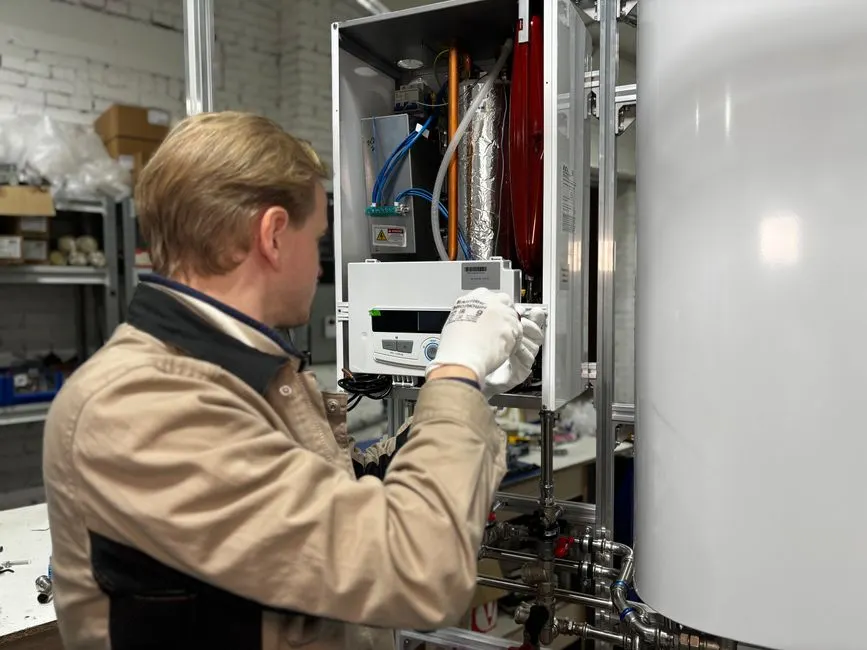 Water Heater RepairWhen maintenance turns up a failed heating element, a bad thermostat, or a leaking T&P valve, we repair it on the same visit. Our trucks carry common parts for Rheem, A.O. Smith, and Bradford White tanks, so most Littleton repairs finish in one trip.Explore →
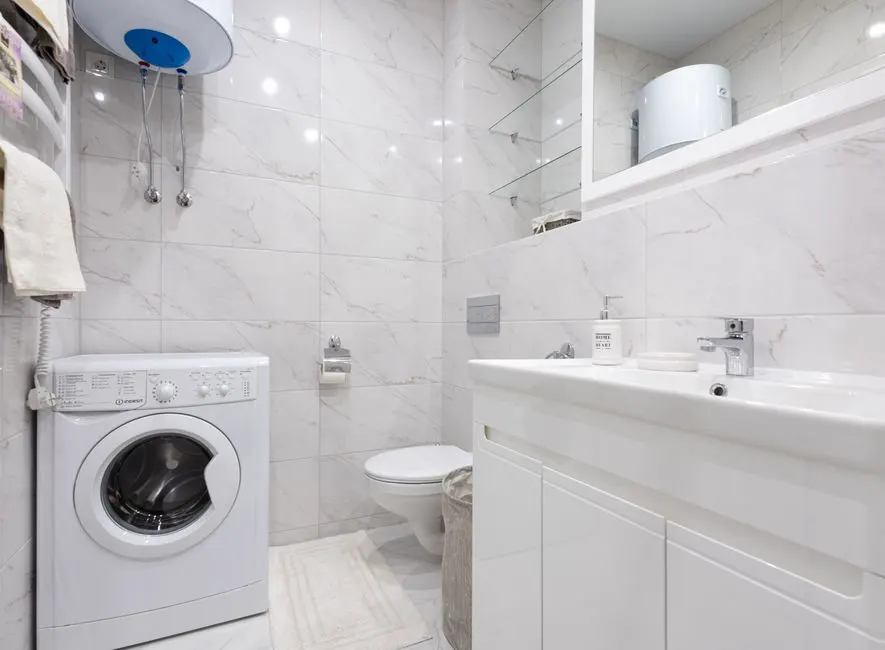 Water Heater ReplacementIf your tank is past year 12 and the anode rod is gone, replacement usually beats another repair. We haul out the old unit, set the new one, and reconnect gas, water, and venting to Colorado code. Most swaps take four to six hours.Explore →
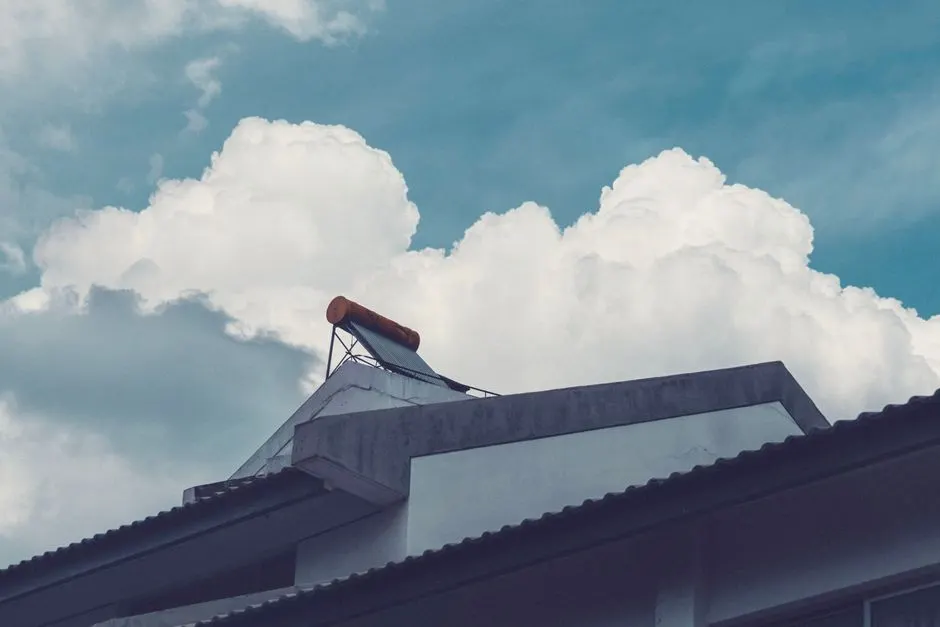 Water Heater InstallationNew construction, remodels, and first-time installs across Littleton. We size the tank to your household, run copper or PEX, install a proper expansion tank, and pull the permit. You get a code-correct install that will not void your manufacturer warranty.Explore →
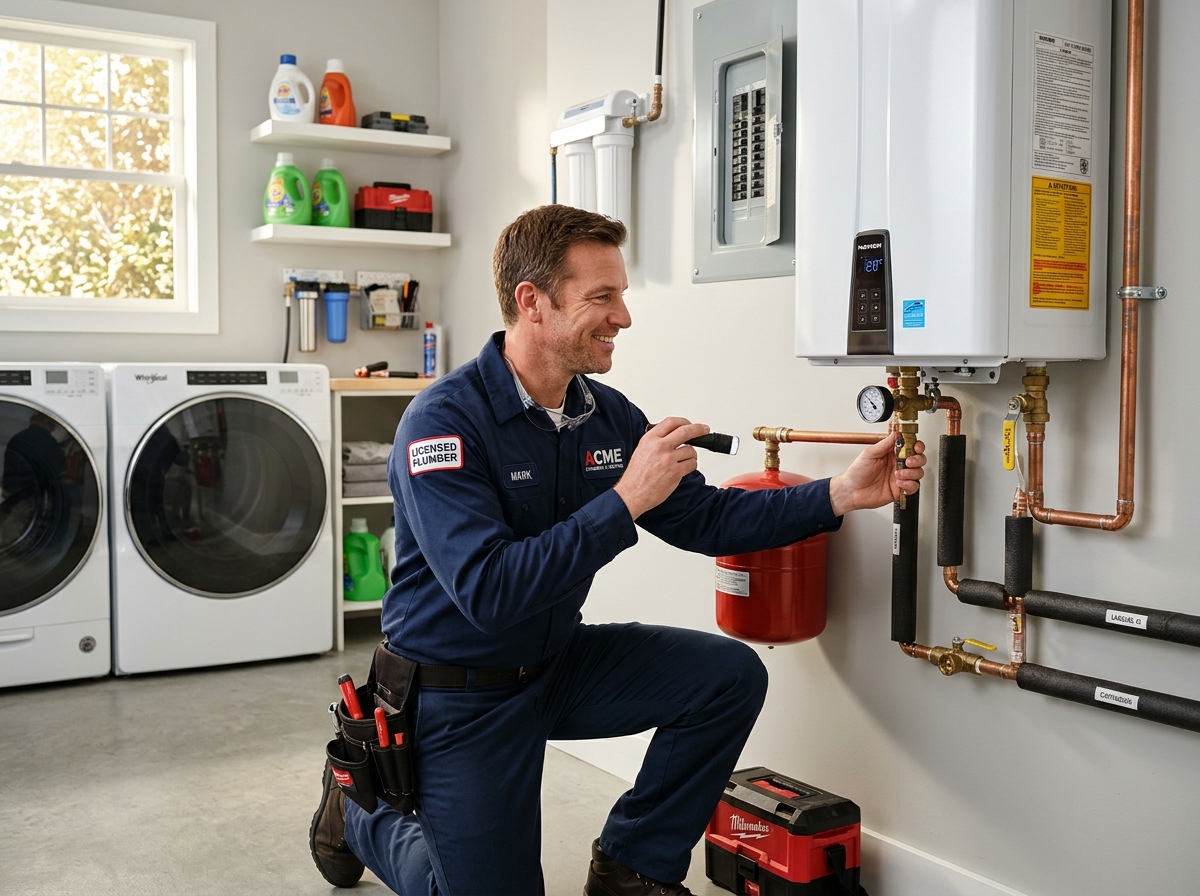 Tankless Water Heater InstallationNavien, Rinnai, Noritz, and Bosch tankless systems installed and commissioned by our team. We size the unit to your fixtures, run the gas line, and set the descaling schedule. Annual maintenance keeps the heat exchanger under warranty and the hot water endless.Explore →
One visit now saves you an emergency call in January. We flush the tank, test every part, and leave you a written report. Call (720) 698-9814 or book online and we will get you on the schedule.
Book My Tune Up (720) 698-9814 →Call (720) 698-9814 any time, day or night, and a real person picks up. For non-emergency work, we schedule same-day or next-day appointments across Littleton and the surrounding ZIP codes. Tell us what's going on with your water heater and we'll get a licensed plumber headed your way.